Industry Updates
For Mediation Institute Members and other Dispute Resolution Professionals
Recent Posts

How do I download my Mi Membership Certificate? (Easy 4 Step Guide)
Learn how to download your Mi Membership Certificate from www.mimembers.au Step-by-step guide with screenshots, troubleshooting tips, and FAQs to access your Membership certificate.
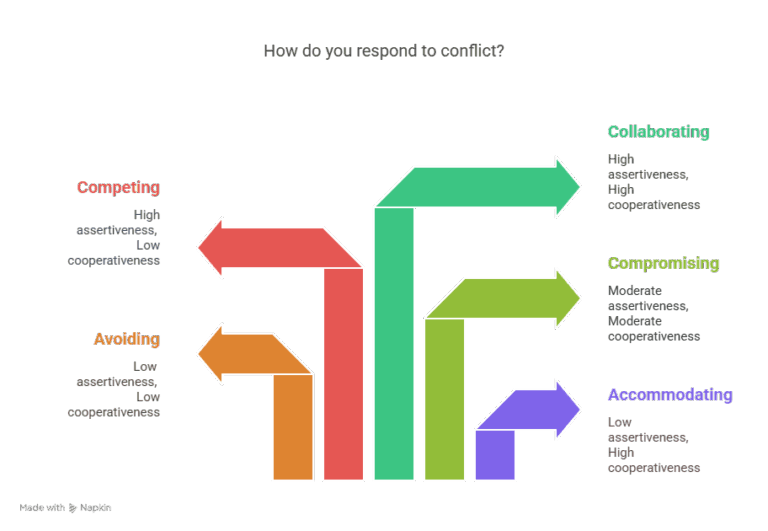
Using the Conflict Styles Model in Mediation
Conflict styles is a classic model for thinking about the way that people engage with conflict.

Are you eligible for the AMDRAS Elder Mediation Specialisation?
Learn how to apply for the Elder Mediation Specialisation and gain AMDRAS accreditation as a Specialist Dispute Resolution Practitioner (Elder Mediation)

Understanding Family Law Add-Backs: A comprehensive guide for 2025
Family Law Add-Backs explained — Learn how courts assess assets, the types of add-backs allowed, and their impact on property settlements in 2025.

Mediator Employers
Mediator Employers Find out more about Mediator Employers and the organisation types that mediators contract with. Top Mediator Employers in

Mediation Training: Empower Your Career Today
Discover how mediation training with Mediation Institute can transform your personal and professional life. Learn key skills, program types, and career benefits in this ultimate guide.
Catch up with On Demand CPD
Update Your Find a Mediator Profile | Step-by-Step Guide for Mediation Institute Members
Hello. Today I'm going to show you how to put some content into your profile for our Find a Mediator panel. You're able to add images and content ...about yourself.
0:26 — Example of a great profile
Natalie has added her photo, her logo, a link to her business, an email address, and keywords that identify the type of work she does. This is ideal because it helps people find you on the Find a Mediator page — and it makes it easier for us to refer you.
0:55 — Why a complete profile matters
We tend not to refer people to blank profiles. The link on your profile also allows people to email you directly about work.
1:15 — How to log in and join as a member
If you're not a member, you can join Mediation Institute as a practitioner member. Membership is $190 a year and includes access to all CPD events, courses, and free one-hour CPD sessions for members and students.
3:25 — How to update your profile (About Me section)
Go to My Settings, then navigate to About Me. This is where you update your bio, add qualifications, and enter keywords to help potential clients find you.
4:30 — Adding your logo
Go to My Organisation, click Edit Logo, upload your logo image, and hit save.
5:27 — Finding and sharing your profile link
Once your profile is open, click on Profile Page — the URL will update with your details. Copy that link and use it in your email signature or anywhere you like.
6:23 — Recap
Log in at http://www.mimembers.au → My Settings → About Me. Update your bio, add keywords (specialisations, languages, cultural background), add a photo, and click save.
7:14 — Wrap up
Once you're happy with it, click save. Remember to add a photo. That's all for now — thank you, bye!Show More

Hello. Today I'm going to show you how to put some content into your profile for our Find a Mediator panel. You're able to add images and content ...about yourself.
0:26 — Example of a great profile
Natalie has added her photo, her logo, a link to her business, an email address, and keywords that identify the type of work she does. This is ideal because it helps people find you on the Find a Mediator page — and it makes it easier for us to refer you.
0:55 — Why a complete profile matters
We tend not to refer people to blank profiles. The link on your profile also allows people to email you directly about work.
1:15 — How to log in and join as a member
If you're not a member, you can join Mediation Institute as a practitioner member. Membership is $190 a year and includes access to all CPD events, courses, and free one-hour CPD sessions for members and students.
3:25 — How to update your profile (About Me section)
Go to My Settings, then navigate to About Me. This is where you update your bio, add qualifications, and enter keywords to help potential clients find you.
4:30 — Adding your logo
Go to My Organisation, click Edit Logo, upload your logo image, and hit save.
5:27 — Finding and sharing your profile link
Once your profile is open, click on Profile Page — the URL will update with your details. Copy that link and use it in your email signature or anywhere you like.
6:23 — Recap
Log in at http://www.mimembers.au → My Settings → About Me. Update your bio, add keywords (specialisations, languages, cultural background), add a photo, and click save.
7:14 — Wrap up
Once you're happy with it, click save. Remember to add a photo. That's all for now — thank you, bye!Show More

In this ...course, you'll:
✅ Learn practical supervision tools and frameworks
✅ Connect with peers in supervision circles
✅ Practice real-world supervision skills
✅ Gain a pathway to formal recognition
Ready to get started? Find out more - https://www.mediationinstitute.edu.au/supervision-training/
Students Complete these three steps and then start on the self-paced online course materials.
1. Download the Reflective Supervision Companion Guide using the link below or from within the course files.
2. Join our MI Mediators Network supervisor space for collaboration in between scheduled sessions.
3. RSVP for your supervision circle sessions in the Network.
Get ready to grow together with us as a Reflective Practice Supervisor.
#Mediation #DisputeResolution #ProfessionalDevelopment #ClinicalSupervision #ReflectivePractice #MediationInstituteShow More

Perfect for family dispute resolution practitioners, workplace mediators, and anyone seeking to deepen their reflective practice through quality supervision or even personal reflection.
🎯 What You'll Learn:
• Why most case studies stay at surface level
• The 6-part structure for reflective case studies
• How to identify and explore ethical tensions
• Strategies for examining your internal decision-making
• Common pitfalls to avoid in case study preparation
📚 Resources:
• Free case study preparation tool for Mediation Institute Members
• Introduction to the Seven Eyes supervision model
• Tripod Model for balanced supervision
⏱️ TIMESTAMPS
0:00 Introduction & Acknowledgement
0:58 What's Hardest About Case Studies
3:23 Why Case Studies Stay Superficial
4:56 Example: Superficial Case Study
6:09 Supervision Questions
7:42 How to Design a Case Study
8:12 Professional Supervision Overview
9:25 Supervision Ready Case Study Elements
11:00 Reflection as Risk Management
11:33 Six Part Structure Tool
14:19 Detailed Example - Context
16:01 Detailed Example - Process Decision
16:20 Detailed Example - Ethical Tension
16:37 Detailed Example - Internal Experience
17:21 Detailed Example - Questions
19:07 Group Discussion
28:19 Tripod Model Introduction
29:27 Seven Eyes Model
31:05 Common Ethical & Reflective Pitfalls
38:47 Recap & Key Takeaways
40:18 Q&A - Supervisor Course
🔗 Related Links:
https://www.mimembers.au/links
https://www.mediationinstitute.edu.au/supervision-training/
📢 About This Webinar:
Presented by the Mediation Institute, this webinar provides practical guidance for mediators and family dispute resolution practitioners seeking to maximize the value of professional supervision.
Mediation #ProfessionalSupervision #CaseStudy #FDR #ReflectivePractice #MediationTraining #ProfessionalDevelopmentShow More

The video by Mediation Institute Director, Joanne Law provides a quick orientation to Mediation Institute systems and study processes, including ...how to log into the learning management system at mi.study247.online, create a free account, or reset a password, and where to find enrolled courses on the dashboard.
It explains recommended course order (starting with the Student Hub and “Operate in a Family Law Environment”), clustered core and elective units, and how to adjust notification preferences and add a profile picture. It also introduces the separate membership site (www.mimembers.au) for free student access to events and recordings via a manual approval process, and the Mediation Institute Network collaboration space—especially the FDR students hub—for connecting with other students, role plays, event links, and questions.
Contact options for student support, orientations, and assignment help are provided.
00:00 Welcome and Overview
00:10 Course Login Setup
01:07 Dashboard and Course Tiles
02:47 Notifications and Profile
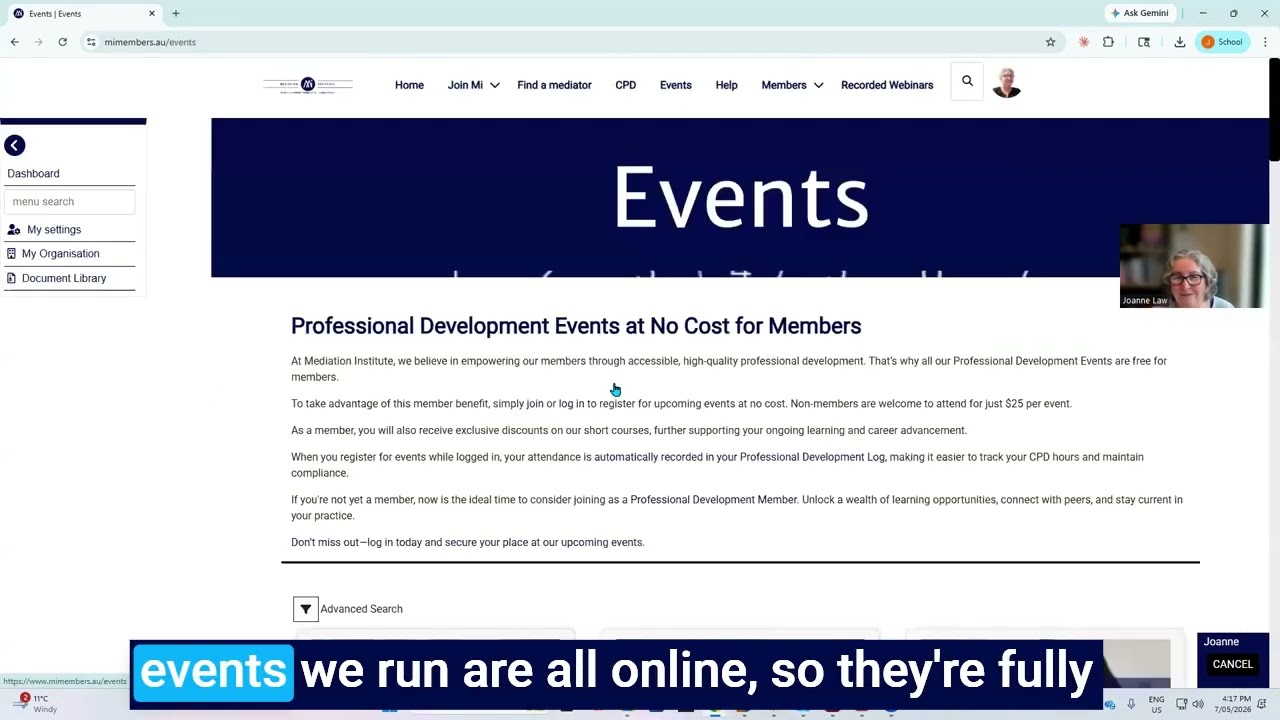
04:25 Member Site and Events
05:39 Support Contacts and Access
06:00 Network Collaboration Space
07:13 Student Hub and Role Plays
07:50 Wrap Up and Next StepsShow More

In this comprehensive webinar, Joanne Law, Director of Mediation Institute, clarifies ...the professional boundaries, obligations, and key differences between FDR practitioners under the Family Law Act and nationally accredited mediators under AMDRAS standards.
📌 What You'll Learn:
✅ Why jurisdictional distinction matters for your practice
✅ Statutory obligations for FDR practitioners vs AMDRAS mediators
✅ Child focus, safety, and suitability assessment requirements
✅ Section 60I certificate authority and responsibilities
✅ Confidentiality and inadmissibility protections
✅ Registration pathways and accreditation requirements
✅ Professional development obligations (24-25 hours every 2 years)
✅ Record-keeping requirements (updated 2025 regulations)
✅ Common complaints and how to avoid them
✅ Decision-making framework for determining FDR vs general mediation
⏱️ Chapters:
0:00 Introduction & Acknowledgment
2:00 Why Jurisdictional Distinction Matters
4:06 Overlap Between FDR and AMDRAS
7:25 What Changes When It's FDR
11:03 Jurisdictional Triage
14:10 AMDRAS vs FDR Systems Comparison
25:49 FDR Obligations Under Family Law Act
29:51 Summary of Key Differences
36:01 Decision Making Framework
37:19 Insights from Complaints
42:00 Closing Remarks
🎓 Presented by:
Joanne Law, Director of Mediation Institute and Manager of the approved complaint handling service for nationally accredited mediators and FDR practitioners. http://www.mediationinstitute.edu.au
📋 Key Updates Covered:
- Family Law (Family Dispute Resolution Practitioners) Regulations 2025
- Updated Section 114B (formerly Section 117) cost provisions
- New record-keeping requirements
- Alternative pathways for AMDRAS accreditation
🔗 Resources Mentioned:
AMDRAS Board: http://www.amdras.au
Australian Institute of Family Studies: https://aifs.gov.au/resources/resource-sheets/mandatory-reporting-child-abuse-and-neglect
Mediation Institute: http://www.mediationinstitue.edu.au for training information. http://www.mimember.au for professional membership information
⚠️ Important for Practitioners:
If you only have core units and rely on AMDRAS accreditation for FDR registration, your FDR status is conditional on maintaining national accreditation. Don't let it lapse!
💬 Questions or Comments?
Share your thoughts below or contact Mediation Institute for more information.
📧 Want the Decision Tree Document?
Email us at office@mediationinstititute.edu.au to request a copy.
#FamilyDisputeResolution #FDR #Mediation #FamilyLaw #AMDRAS
© Mediation Institute
This presentation is for educational purposes. Always consult current legislation and seek professional advice for specific situations.Show More

This short from Mediation Institute summarises the importance of summaries in the Mediators Skill Set.
A summary is ...a concise presentation of the key points, insights or conclusions drawn from a larger discussion.
In mediation it is not a simple retelling and it is never without purpose.
Mediators listen for the hidden gems in the conversation. The competing priorities. The Underlying Interests. The Values Conflicts. The Key Facts. The Hidden Needs. The Emotional Signals. The Potential Options. When Agreement is Possible.
Mediator Summaries then highlight these hidden gems which often get obscured or lost in the flow of conversation.
The role of the mediator is to provide clarity. We shine a light with our summaries and help the parties see what matters most to them. Our summaries keep discussions productive.
Next time you mediate listen carefully and bring the hidden gems into focus with concise summaries.
What insights do you have about summaries?
Share an example of a time when a summary you did brought a hidden gem to the surface and changed the dynamic of a mediation process.Show More

Whether you're new to mediation or enhancing your skills, this course sets ...you on the path to becoming a nationally accredited mediator in Australia.
Over a comprehensive six-week learning pathway, you will explore the foundations of mediation, ethical practices, and diverse dispute resolution contexts. The course includes interactive quizzes, role plays, and self-directed learning with support from a dedicated training team. Stay engaged, complete your activities, and achieve your Certificate of Training!
00:00 Welcome & Introduction
00:02 Course Overview & Your Journey
00:35 Mediation Focus & Course Content
00:59 Interactive Learning & Role Plays
01:16 Six Week Learning Pathway
01:58 Course Flexibility & Time Commitment
02:54 Engagement Requirements & Certificate Eligibility
03:47 Support Team & Course Navigation
05:49 Final Encouragement & Next Steps
🎯 WHAT YOU'LL LEARN
• Foundations of facilitative mediation
• Non-determinative mediation models
• Ethical and effective mediation practices
• Skills for diverse dispute resolution contexts
⏱️ COURSE STRUCTURE
• 6-week pathway (up to 6 months to complete)
• 45+ hours live trainer interaction
• 15+ hours self-directed learning
• 2 hour pre-mediation role play practice session
• 9+ realistic mediation role play simulations
• Interactive quizzes and activities
✅ REQUIREMENTS
• Complete all quizzes and learning activities
• Participate in mandatory role plays
• Attend live webinars or review recordings with additional role play participation
• Steady engagement and progress
🎓 CERTIFICATION
Upon completion, receive your Certificate of Training—qualifying you for the Certificate of Assessment, the final educational step toward AMDRAS accreditation.
Considering this training? Visit https://www.mediationinstitute.edu.au/amdras-certificate-of-training/ for more information.
MediationTraining #AMDRAS #DisputeResolution #MediatorCertification #ProfessionalDevelopment #ConflictResolution #AustralianMediation #OnlineLearningShow More

What You'll Learn:
🔹 Definitions & Core Concepts - Understanding the fundamental differences between FDR and elder mediation
🔹Participants - Who's involved in each process and why it matters
🔹 Timing - When each type of mediation is appropriate (pre-crisis vs. post-crisis)
🔹 Guiding Principles - Rights of children vs. rights of older persons
🔹 Ethical Challenges - Navigating capacity, power imbalances, and mediator neutrality
🔹 Implicit Biases - Recognizing ageism, caring roles, and cultural expectations
🔹 Legal Framework - Understanding the legislation governing each practice
Key Takeaways:
• FDR focuses on the best interests of the child, while elder mediation centres on the wishes and preferences of the older person
• Elder mediation can be preventative and used throughout the aging journey, not just in crisis
• The concept of "dignity of risk" - respecting an older person's right to make their own choices, even when they involve risk
• Capacity is assumed in elder mediation and can be enhanced through creative mediation approaches
• Elder mediation is collaborative, often involving multiple parties and professional supports
About the Speaker: Sian Dyce is a family dispute resolution practitioner and elder mediator with extensive experience in both fields. She is passionate about supporting families through important conversations around separation and aging. https://www.familytalks.com.au/our-services
Timestamps:
0:00 - Introduction & Acknowledgement of Country
9:00 - Definitions: FDR vs. Elder Mediation
15:00 - Participants in Each Process
21:00 - Timing: Pre-Crisis vs. Post-Crisis
26:00 - Guiding Principles & Rights
37:00 - Voice at the Centre
57:00 - Ethical Issues & Power Balance
87:00 - Capacity in Elder Mediation 106:00 - Implicit Biases
114:00 - Legal Status & Framework
Resources Mentioned:
• Elder Mediation International Network (EMIN)
• Elder Mediation Australasian Network (EMAN)
• New Aged Care Act Statement of Rights
• Professor Dale Bagshaw's Elder Mediation Training
• Mediation Institute hosted Mi Mediators Network
This presentation is ideal for mediators, family dispute resolution practitioners, legal professionals, and anyone interested in understanding the nuances of elder mediation as a specialized practice area.
________________________________________
#ElderMediation #FamilyDisputeResolution #Mediation #AgedCare #FamilyLaw #ConflictResolution #ElderCare #MediationInstituteShow More

00:00 Introduction and Overview
00:11 Mediator's Self-Assessment
02:39 Mediators Opening Statements
07:35 Manny's Opening Statement
15:33 Tibby's Opening Statement
21:39 Forming the Agenda
27:17 Exploration and Option Generation (abbreviated)
38:52 Private Session
47:54 2nd Private Session
56:18 Negotiation
1:07:18 Documenting Agreement
1:23:35 CloseShow More

In this insightful webinar, Sian Dyce, a family and elder mediator, discusses the essential role of elder mediation in families, especially ...as they navigate the complexities of aging. Sian highlights the benefits of elder mediation, including its ability to facilitate respectful and collaborative conversations around aging, future needs, and family wishes. The session delves into what elder mediation is, how it works, and its goals, which include maximising the quality of life and relationships while promoting wellness and preventing conflicts.
Sian shares personal anecdotes and case studies to illustrate the importance of early and continuous conversations within families.
The presentation also covers the rights of older individuals, the concept of 'dignity of risk,' and the practical steps involved in the elder mediation process.
This session is part of the International Mediation Awareness Week and is hosted by the Mediation Institute.
00:00 Introduction and Welcome
00:47 Acknowledging Traditional Custodians
01:39 What is Elder Mediation?
04:02 Goals and Benefits of Elder Mediation
05:51 The Concept of Wellness in Elder Mediation
11:46 Case Study: The Dignity of Risk
13:41 The Elder Mediation Process
15:29 When to Use Elder Mediation
19:23 Challenges and Hidden Expectations in Families
24:01 The Secret Life of Carers
27:26 The Role of Elder Mediators
29:38 The Importance of Courageous Conversations
29:59 Elder Mediation: Reducing Stress and Conflict
30:39 Supporting Informal Carers and Delaying Aged Care
31:34 Encouraging Family Conversations
31:40 Personal Story: The Need for Early Conversations
32:19 Resources for Elder Mediation
33:28 Training and Accreditation in Elder Mediation
34:15 Q&A: Addressing Elder Mediation Concerns
36:10 The Role of Mediators in Elder Care
43:20 Government Funding and Support for Mediation
47:07 End-of-Life and Advanced Care Planning
49:18 Conclusion and Future PresentationsShow More

Finally, we emphasise the power of language in creating a supportive environment, encouraging empathy over judgment.
00:00 Introduction to a trauma informed Perspective on Domestic Violence
00:25 Understanding Inconsistent Stories
01:15 The Trauma-Informed Perspective
02:31 Recognising Trauma Responses
03:03 Practical Steps for Support
03:48 The Power of Language
04:28 From Judgment to Empathy
04:54 A Call to Action for EveryoneShow More

Drawing from his extensive background ...in law, psychotherapy, and leadership, Dan discusses the historical context of disputes, the importance of understanding existential concerns, and the impact of effective communication in mediation.
Through thought-provoking examples and insights, Dan highlights the role of mediators in helping parties find meaning and resolve conflicts. This also includes a reflection on the mediator's journey in searching for meaning within themselves and their professional lives.
Don't forget to check the accompanying paper linked below for a deeper exploration of these themes. https://www.dsmediation.com.au/uncategorized/mediation-and-a-search-for-meaning/
00:00 Introduction and Speaker Background
00:51 Acknowledgment of Country and Personal History
02:25 Historical Context and Meaning
04:32 Existential Concerns and Mediation
06:36 Communication Challenges in Mediation
10:40 Active Listening and Understanding
12:53 Role of Lawyers in Mediation
17:49 Mediator's Role and Self-Reflection
25:57 Voluntary Mediation and Court Mandates
27:56 Search for Meaning in Mediation
34:59 The Importance of Self-Discovery in Mediation
37:12 Personal Journey to Mediation
38:13 Diverse Career Paths and Their Impact
40:59 The Role of Meaning in Professional Life
43:34 Challenges and Insights in Mediation
46:43 Cultural Perspectives on Mediation
52:36 Final Thoughts and Contact InformationShow More